 Tree "B" Gone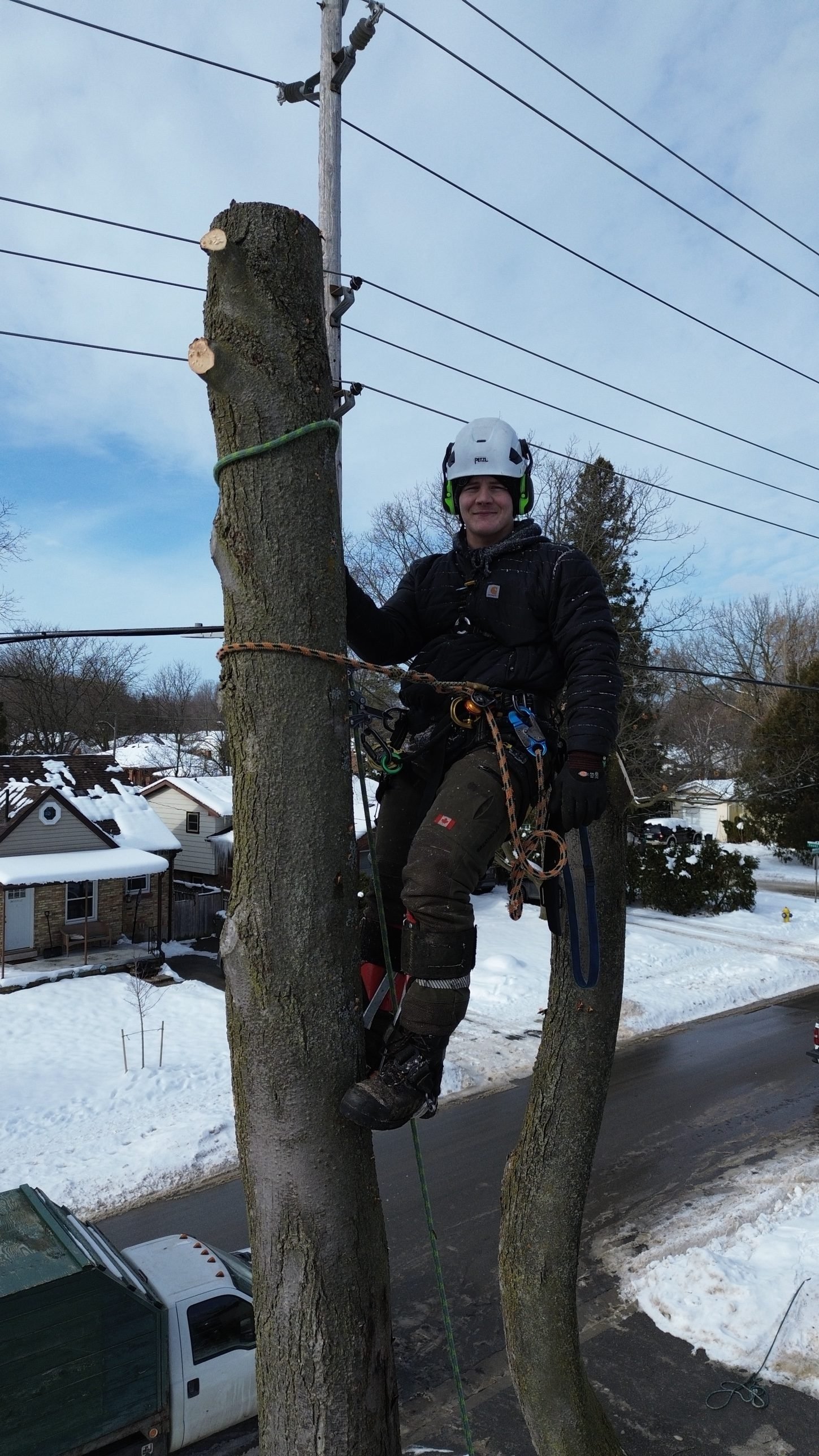
Pruning Is Prevention, Not Just Tidying Up
A tree that's never trimmed doesn't just look overgrown — it's building up dead limbs, crossing branches, and weak unions that eventually fail in a windstorm or under snow load. Regular trimming from Tree "B" Gone removes that risk before it becomes an emergency call, while shaping the canopy so it doesn't crowd your roofline, driveway or power service.
We trim residential shade trees, ornamentals, and fruit trees, plus larger commercial and municipal plantings, across London, St. Thomas and Elgin County. Every job is done with proper pruning cuts at the branch collar — never "topping," which weakens a tree and forces weak, fast-growing regrowth right back into the same problem spots.
What we trim for
- Deadwood and storm-damaged limb removal before they drop on their own
- Canopy raising — clearing branches over driveways, roofs and walkways
- Crown thinning to reduce wind resistance and storm risk
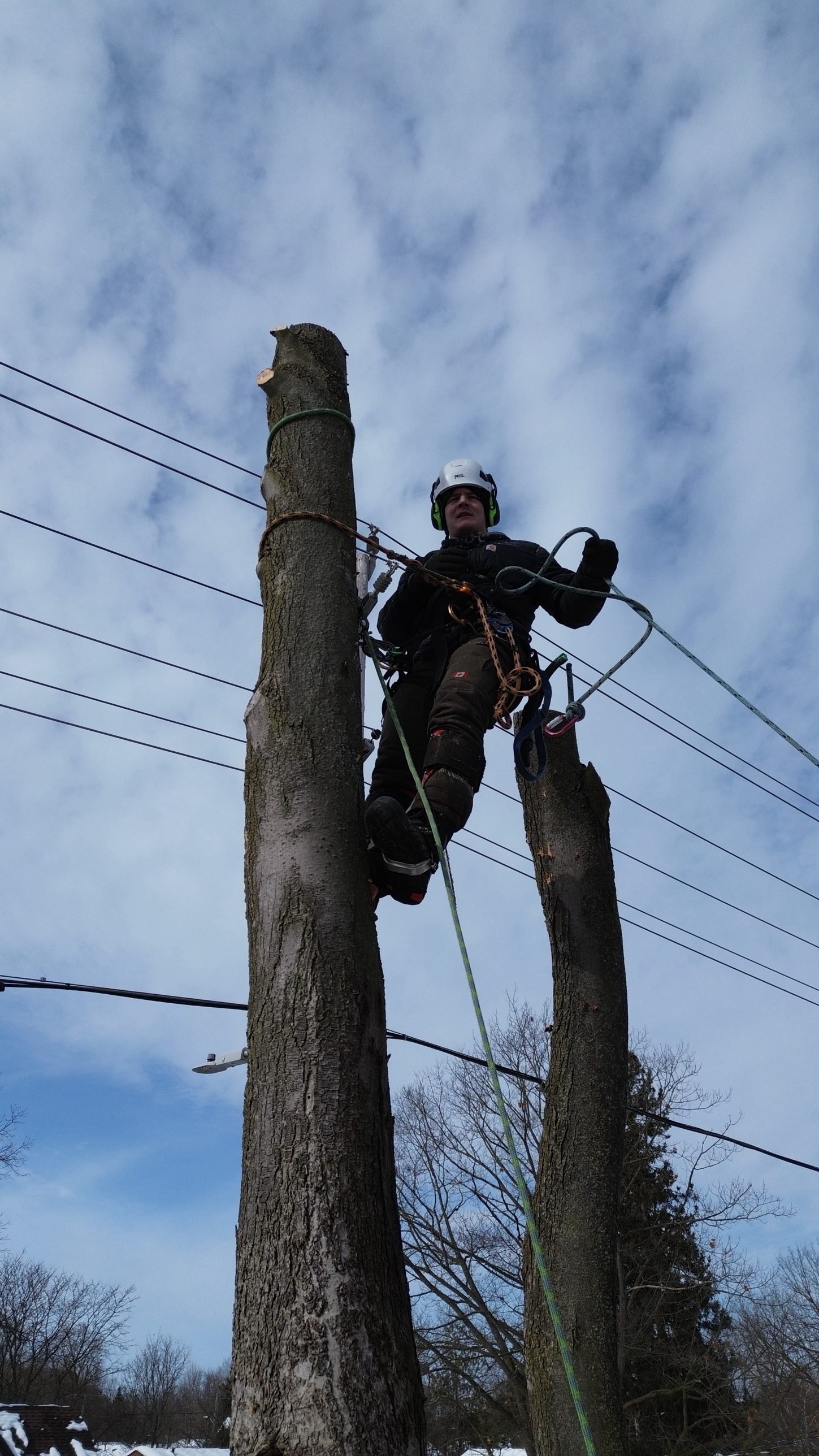
- Clearance pruning around power lines and utility services
- Structural pruning on young trees to build a stronger shape for decades to come
When to trim
Most species are best pruned in late winter or early spring while dormant, but dead or hazardous limbs should come down as soon as they're spotted, regardless of season. If a tree is dropping large branches on its own, treat that as a warning sign and call us — it may need more than a routine trim.